How PENTAX Medical I-DEC™ Video Duodenoscope supports a new standard in endoscopy
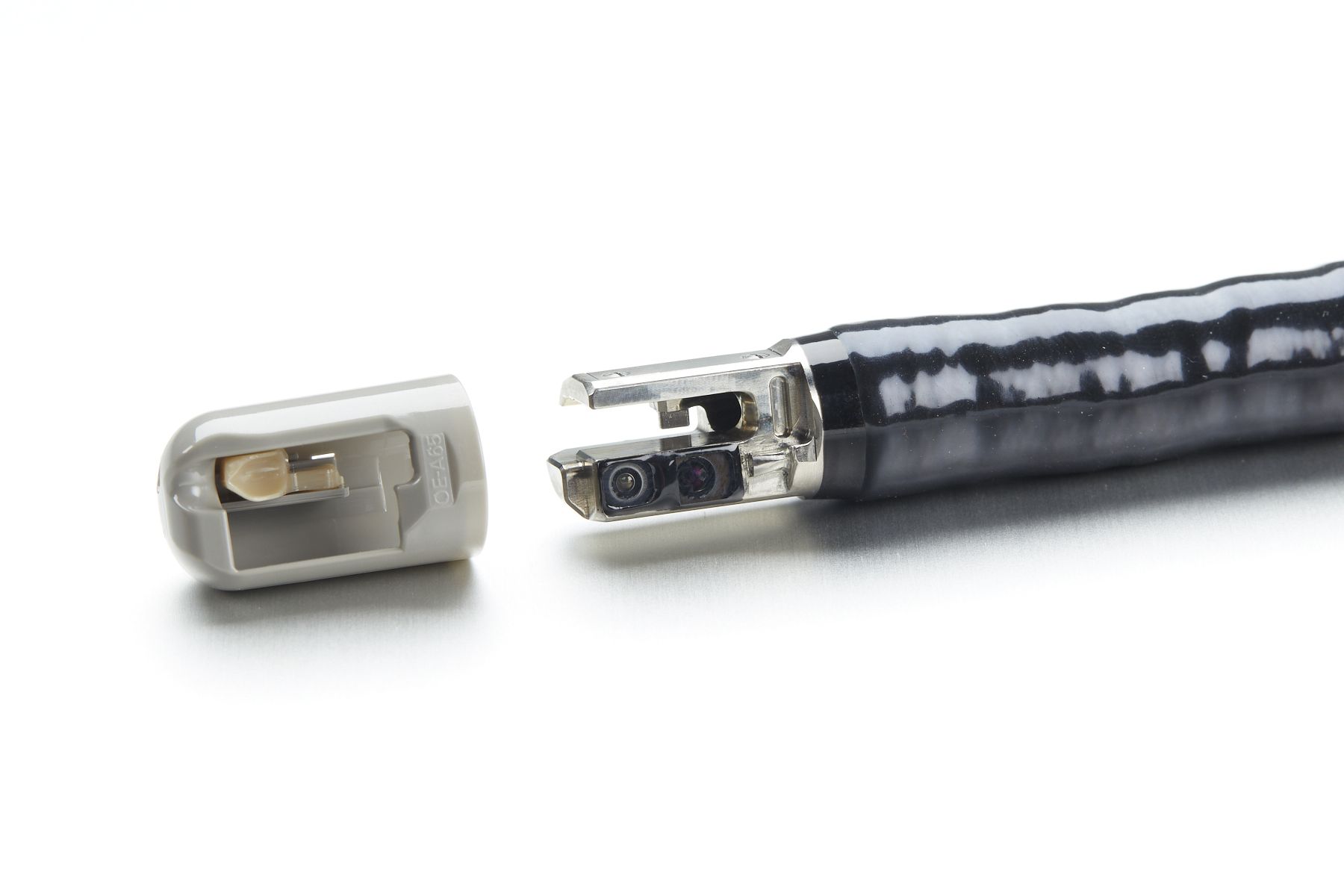
ERCP (Endoscopic Retrograde Cholangiopancreatography) remains one of the most technically demanding procedures in gastroenterology, where precision, control, and infection prevention are equally critical. As endoscopy units face growing procedural volumes and stricter infection control standards, there is increasing focus on technologies that make safety and efficiency intrinsic to design rather than an added burden.
Recent evidence reinforces why this evolution is so important. The landmark ICECAP (Infection Control in ERCP using a Duodenoscope with a Disposable Cap) randomized clinical trial, published in JAMA Internal Medicine[1], demonstrated that duodenoscopes equipped with disposable elevator caps significantly reduce persistent microbial contamination. The results were clear: microbial contamination after reprocessing was 3.8% with the disposable-cap design versus 11.2% with traditional scopes, representing a 66% relative risk reduction. Technical success rates remained equivalent (94.6% vs. 90.7%), and no increase in adverse events was observed. These findings confirm that thoughtful design can significantly reduce contamination risk without compromising procedural outcomes or patient safety.
This aligns closely with the engineering philosophy behind the PENTAX Medical I-DEC™ Video Duodenoscope. The I‑DEC Duodenoscope incorporates a Single-Use Disposable Elevator Cap (DEC), targeting one of the most complex and contamination-prone areas of the device, i.e., the distal end. By enabling single-use replacement of this component, the system reduces distal-end reprocessing steps by up to 35% in comparison to the standard duodenoscopes of major manufacturers[2], simplifying manual cleaning, improving compliance with infection-prevention guidelines, and supporting faster turnaround times between procedures. For busy endoscopy departments, this translates into measurable operational efficiency alongside enhanced patient protection.

“Over the last few years, we have become increasingly aware of issues related to endoscope-associated infections. One of the things I really like about the PENTAX Medical I-DEC™ Video Duodenoscope is that the main challenge in decontamination has been the difficulty of cleaning under the elevator. This has been very nicely addressed by PENTAX Medical with the detachable, single-use cap incorporating the elevator,” said Dr. George Webster, Consultant Gastroenterologist and Hepatologist, and Associate Professor of Medicine at University College London Hospitals and the Royal Free Hospital in London (UK).
Paired with the PENTAX Medical IMAGINA™ video processor, the I‑DEC Duodenoscope delivers HD+ imaging that enhances ductal visualization and supports confident therapeutic intervention. Its ergonomic design provides stable handling for precise cannulation and maneuverability during complex biliopancreatic procedures. The result is a solution that integrates advanced imaging, intuitive control, and practical infection prevention into a single, clinically balanced platform.
Beyond its technical advantages, I‑DEC Duodenoscope reflects a broader shift toward smarter, evidence-based innovation in endoscopy. Partial disposability – such as the detachable or replaceable distal components used in the I‑DEC Duodenoscope – offers a balanced approach between traditional reusable systems and fully disposable scopes. As highlighted in the 2023 MDPI review[3], hybrid duodenoscope designs – such as scopes with disposable elevator caps – offer significant reductions in contamination risk while maintaining cost-effectiveness and minimizing environmental impact.
For healthcare professionals performing ERCP, the message is clear: safety and performance no longer need to compete. The PENTAX Medical I-DEC™ Video Duodenoscope with Disposable Elevator Cap is a tangible example of how design innovation, supported by clinical evidence, can advance both patient safety and procedural efficiency.
Explore the solution here: https://www.pentaxmedical.com/en/products/endoscopes/dec-duodenoscopes.
[1] Bartel, M., Ross, A., Alnahas, S., et al. (2023). Effect of disposable elevator cap duodenoscopes on persistent microbial contamination: The ICECAP randomized clinical trial. JAMA Internal Medicine, 183(1), 34-42. https://pubmed.ncbi.nlm.nih.gov/36689215/
[2] Source: PENTAX Medical internal benchmarking.
[3] Conti, C. B., Cereatti, F., Salerno, R., Grassia, R., Scaravaglio, M., Laurenza, C., & Dinelli, M. E. (2023). Disposable duodenoscopes: Evidence and Open Issues. Life, 13(8), 1694. https://www.mdpi.com/2075-1729/13/8/1694